
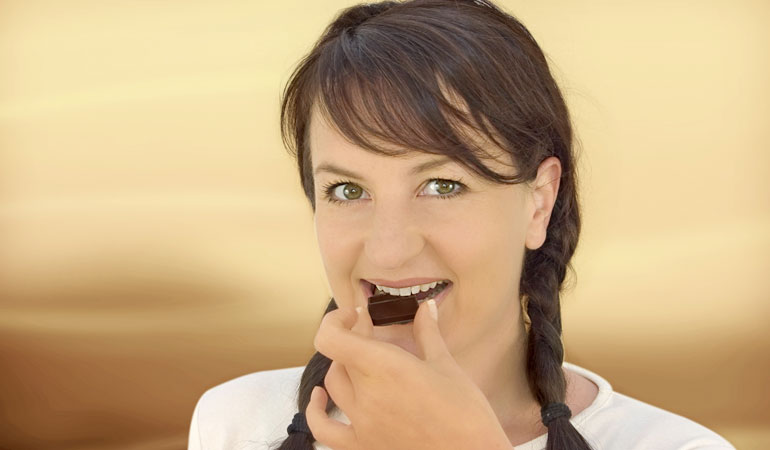
 Ah, grasshopper, tasting chocolate is to begin a journey unending. Tasting chocolate – really taking the time to taste it rather than gobble it – is one of life’s great pleasures.
Chocolate is best enjoyed at room temperature. First clean your palate beforehand with a couple sips of water. If you will be sampling several chocolates, begin with the lightest and cleanse your palate with water in between.
Here are things to look for when tasting chocolate:
1) Attention to detail in the packaging. If they didn’t care much about the package, they probably don’t care much about the chocolate.
2) When you open it, how does it look? Glossy and new? Or is there a “bloom” on the surface? Greyish streaks or spots are “bloom”. There are two types of bloom – “fat bloom” is purely cosmetic and is caused by improper tempering or storage of the chocolate. “Sugar bloom” gives the chocolate a bizarre and grainy texture and horrible flavor. The latter should be thrown out. There are also myths that darker chocolate is always better, or that redder chocolate has a finer flavor, but great tasting chocolate can range from reddish to coppery to dark brown.
3) Does a strong and pleasant chocolate aroma come wafting out? Is it fruity, floral, or earthy? Or is it plastic-y, rubbery, smoky, or sickly sweet (which are caused by improper drying or fermentation of the beans)?
4) When you break off a piece, does it have a nice snap? Does it break easily without being brittle or soggy?
5) Place a small piece sit on your tongue, or press it in between the tongue and roof of your mouth, and let it melt. Does it melt nicely, or does it feel waxy or grainy?
6) Now chew it and move it around your mouth. How is the flavor? What do you notice most? The chocolate? The add-ins (nuts, extracts, etc.)? Do the add-ins and chocolate blend together to create an alchemy or do you taste each flavor individually – there’s no fusion? The flavor should change and offer several pleasant sensations rather than being one single flavor that goes nowhere. A great tasting chocolate will please your whole mouth.
7) When you bite into it, how’s the texture? (See snap, above.) Is it chalky? Is it too gooey? Or does it melt just a little and is fun to chew?
8) Is there an aftertaste? Is there any unpleasant bitterness? How long does the flavor linger in your mouth?
You can keep a chocolate journal, like we do, to record your impressions of different chocolates.
To keep your tasting chocolate fresh:
Remember to store in a cool (60-70 F), dark, dry place away from strong-smelling items such as peppermint or dirty socks. Chocolate has a tendency to absorb other odors. Do not store chocolate in the refrigerator.


THX for the wisdom… After MANY years of just ‘eating’ chocolate, I now know the technique behind experiencing the pleasure and erotica that comes with it. This will open up a brand new ‘life experience’ for me.
“I’ll Be Back”!!!!!! thats for sure!!!!!!
This helped me with my project O MEH GURD I GOT A 100% ON MY TEST ABOUT CHOCOLATE THX SOOOOOOO MUCH